live_tv
Livestream Starting Soon
00
Hours
:
00
Minutes
:
00
Seconds
Up next in 10


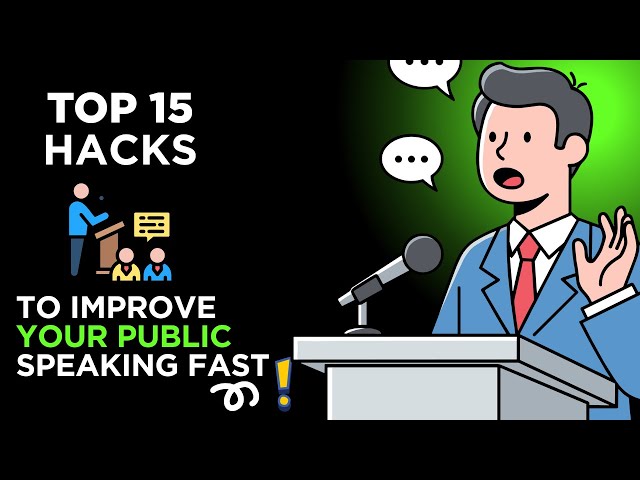
Let's be real—public speaking is terrifying for most of us. That sweaty palm moment before you have to speak in front of people? I've been there more times than I can count.
But here's the thing: you don't need years of practice or expensive courses to become a confident speaker. In this video, I'm sharing 15 practical, proven hacks that have helped thousands of others go from nervous wreck to someone who actually enjoys being on stage.
These aren't your typical tips. These are real, actionable techniques that work whether you're preparing for a big presentation at work, a wedding speech, a college seminar, or even just want to feel more confident in meetings.
What makes these hacks different?
They're fast. Most of them you can implement TODAY and see results immediately. No lengthy training required.
Who is this for?
Students preparing for presentations or defenses
Professionals who need to speak in meetings or pitches
Anyone giving a toast, speech, or talking at an event
People who freeze up when all eyes are on them
Beginners who've never done public speaking before
Even experienced speakers looking to level up
💬 Comment below: What's your biggest fear when it comes to public speaking? Let's tackle it together!
📌 Don't forget to:
Show More Show Less View Video Transcript
0:00
Hello, welcome to our channel, Top 10s
0:01
You Should Know. Today we're talking
0:03
about a skill that can change your
0:05
relationships, your confidence, your
0:07
career, honestly, your entire life.
0:09
Public speaking. Today we're diving into
0:12
15 fast, practical, psychologybacked
0:14
hacks that transform your speaking from
0:16
anxious, and shaky to controlled, warm,
0:19
confident, and unforgettable. So, take a
0:22
deep breath, relax your shoulders, and
0:24
let's begin.
0:26
One, slow down your first 10 seconds.
0:29
Most people don't realize this, but the
0:31
first 10 seconds of your speech decide
0:34
almost everything. Your tone, your pace,
0:36
your confidence, your control. Nervous
0:39
speakers rush these 10 seconds because
0:41
they're trying to escape the discomfort.
0:44
Confident speakers slow down, breathe,
0:46
pause, and allow silence to settle
0:48
before speaking. That silence may feel
0:51
awkward to you, but to the audience, it
0:53
feels powerful, intentional, and
0:55
grounded. When you slow down the
0:57
beginning, your brain catches up, your
0:59
heartbeat stabilizes, and your voice
1:01
flows naturally. It's like setting the
1:04
tempo for your entire speech. Two, use
1:07
the triangle eye contact method. One
1:10
biggest mistake nervous speakers make is
1:12
staring at one person, avoiding everyone
1:15
entirely or darting their eyes around
1:17
like they're searching for an exit.
1:19
Confident speakers use controlled,
1:21
intentional eye contact. And one of the
1:23
fastest hacks is the triangle method.
1:26
Divide the room into three zones, left,
1:28
center, right. Every few sentences,
1:31
shift your gaze smoothly from one zone
1:33
to another, holding two to 3 seconds
1:35
each. This makes you appear confident,
1:38
composed, and engaged with the whole
1:40
room, not just one corner. It also
1:43
prevents you from drilling one person
1:44
with too much eye contact or losing
1:47
connection by staring at the floor. And
1:49
here's the secret. Strong eye contact
1:51
makes you feel more grounded, not just
1:54
the audience. Three, practice the two
1:57
second breathing reset before speaking.
2:00
Public speaking anxiety isn't mental,
2:02
it's biological. Your heartbeat speeds
2:04
up, your breath shortens, and your body
2:06
thinks it's in danger. One hack that
2:09
instantly resets your nervous is the two
2:11
second breathing technique. Inhale for 2
2:14
seconds, hold for 2 seconds, exhale for
2:16
4 seconds. This longer exhale signals
2:19
your brain to calm down. Doing this
2:22
three times before you begin speaking
2:24
reduces shaking, stabilizes your voice,
2:26
and gives your mind clarity. Most people
2:28
think confidence comes from knowing what
2:30
to say, but it actually comes from
2:32
regulating your body. When your breath
2:34
is calm, your message becomes clear.
2:37
Even professional speakers use this
2:38
technique backstage because it works
2:40
immediately and subtly.
2:43
Four, start with a relatable mintory.
2:47
Facts impress people, but stories
2:49
connect with people. If you start a
2:51
speech by throwing information at the
2:53
audience, you risk losing them in the
2:55
first minute. But when you begin with a
2:57
small, relatable story, a moment of
2:59
fear, a funny mistake, a personal
3:01
memory, the audience instantly leans in.
3:04
Humans are wired for storytelling. It
3:06
makes your message warm, human, and
3:08
emotionally engaging. A mini story
3:11
doesn't have to be dramatic. It just
3:13
needs to reveal something real or
3:14
authentic. For example, I still remember
3:17
the first time I froze on stage
3:19
immediately builds connection. Five, use
3:22
hand gestures that match your words.
3:25
Hand gestures aren't decoration, they're
3:27
emphasis, but nervous speakers either
3:30
freeze their hands or overuse them
3:31
chaotically. The fastest hack is to use
3:34
purposeful gestures that match your
3:36
message. Open palms for honesty,
3:38
counting fingers for lists, wide
3:40
gestures for big ideas, small gestures
3:43
for subtle points. Gestures make you
3:45
appear natural, dynamic, and visually
3:47
engaging. They also improve vocal tone
3:50
because your body becomes expressive,
3:52
not stiff. When your hands move
3:54
intentionally, your brain becomes more
3:56
articulate. The key is authenticity.
3:59
Gestures should flow with your words,
4:01
not feel like choreography.
4:03
Six, master the power pause. Most
4:06
beginners fear pauses because they think
4:08
silence means they're forgetting
4:10
something or losing momentum. But
4:11
confident speakers use pauses as a
4:13
weapon. A well-timed pause after an
4:16
important sentence makes your message
4:17
feel powerful. It lets the audience
4:19
absorb your words. It gives your voice
4:22
emotional texture. It also gives you
4:24
micro moments to breathe, think, and
4:26
control your pace. Pausing doesn't make
4:29
you look unsure. It makes you look
4:30
intentional and dramatic. Great
4:33
speeches, great movie scenes, great
4:35
moments, all rely on silence. Seven,
4:38
record yourself for 60 seconds daily.
4:41
One of the fastest shortcuts to
4:43
improvement is watching yourself. Not
4:45
for perfection, but for awareness.
4:48
When you record a 60-second clip daily,
4:50
you start noticing things you never
4:52
catch in the moment. Pacing, fillers,
4:55
awkward gestures, weak tone, rushed
4:57
beginnings. It's uncomfortable at first,
4:59
but incredibly powerful. You improve
5:02
fast because you see yourself the way
5:03
the audience sees you. Over a week, your
5:06
tone becomes more stable. Over a month,
5:09
your pacing becomes smoother. Over a few
5:11
months, you transform. Eight, stop
5:14
trying to sound smart. Aim to sound
5:16
clear. Many people make public speaking
5:19
harder by trying to impress the room
5:20
with big words or complex explanations.
5:23
This actually makes you sound more
5:24
nervous, not smarter. The hack, speak
5:27
simply. Use clear language. Break ideas
5:30
into digestible parts. The smartest
5:32
speakers don't show off vocabulary. They
5:34
show clarity. Clear communication builds
5:36
authority because the audience
5:38
understands every word. And clarity
5:41
requires confidence. Confidence to speak
5:43
plainly, to be understood, to not hide
5:46
behind complexity.
5:48
When you prioritize clarity, you remove
5:50
unnecessary pressure from your brain and
5:52
and suddenly your delivery becomes
5:54
smoother, your tone becomes warmer, and
5:56
your message becomes stronger. People
5:58
admire speakers who make things easy to
6:01
understand, not those who make
6:03
everything sound complicated.
6:05
Nine,
6:07
warm up your voice. Your voice is an
6:09
instrument, and like any instrument, it
6:11
needs warm-up. A 30- secondond vocal
6:13
warm-up can dramatically improve your
6:15
tone, volume control, and clarity.
6:17
Simple hums, lip rolls, tongue
6:19
exercises, or reading a paragraph aloud
6:21
can warm your vocal cords and make your
6:23
voice smoother. Nervous voices crack
6:26
because the muscles are cold. When
6:28
warmed up, your voice sounds deeper,
6:30
calmer, and more stable. If you want
6:32
fast improvement, don't just practice
6:34
your speech, prepare your voice. 10.
6:38
Structure your message with the rule of
6:40
three. The human brain loves patterns,
6:43
especially threes. When you divide your
6:45
message into three parts, it becomes
6:47
more memorable, engaging, and easier to
6:50
follow. For example, here's the problem,
6:52
here's the reason, and here's the
6:54
solution. Using the rule of three
6:56
improves flow and keeps the audience
6:58
mentally aligned with you. It also
7:00
prevents rambling because your structure
7:02
becomes naturally clean and rhythmic.
7:05
11. Stand with balanced posture. Your
7:08
posture communicates confidence before
7:10
you even speak. Stand with your feet
7:13
shoulderwidth apart, shoulders relaxed,
7:15
and spine straight. Avoid shifting from
7:18
side to side or locking your knees. Both
7:20
reveal anxiety. Balanced posture keeps
7:23
you grounded, improves breath flow, and
7:25
gives your voice more power. A confident
7:27
stance instantly elevates your
7:29
credibility and calms your nervous
7:31
system. 12. Use anchoring sentences.
7:35
Anchoring sentences are simple lines
7:37
that help you regain control if you lose
7:39
your place. Things like, "Here's what
7:41
really matters" or, "Let's break this
7:43
down." These give you time to think,
7:46
reset, and continue smoothly without
7:48
showing panic. Anchoring sentences make
7:51
you sound polished even when recovering
7:53
from mistakes, a professional level
7:54
skill.
7:56
13. Engage with one person at a time.
7:59
Instead of speaking at the room, speak
8:01
to individuals. Look at one person for a
8:03
sentence, then another. This makes your
8:05
delivery feel personal and natural.
8:07
Audiences respond more warmly when they
8:10
feel individually acknowledged, not
8:12
collectively talked at. This hack builds
8:14
connection fast. 14. Use vocal variety.
8:18
Monotone kills speeches. Use changes in
8:21
speed, volume, and tone to create
8:22
emotion and emphasis. Speak slower for
8:25
serious moments, faster for excitement,
8:28
softer for intimacy, louder for
8:30
conviction. Vocal variety keeps the
8:32
audience emotionally engaged, and
8:34
prevents the speech from feeling flat.
8:36
15. End with a powerful final line. Your
8:39
ending determines what people remember.
8:42
Don't fade out or ramble. End with one
8:44
powerful, clear sentence that summarizes
8:46
your message or inspires action. Strong
8:49
endings leave emotional footprints. They
8:52
make you unforgettable. They transform a
8:54
good speech into a meaningful one.
8:57
And that wraps up our list of the top 15
8:59
hacks to improve your public speaking
9:01
fast.
9:03
Which hack are you going to try first?
9:05
Or do you have your own technique that
9:07
works for you? Share your thoughts in
9:09
the comments. We'd love to hear your
9:11
opinion.
#Self-Help & Motivational